

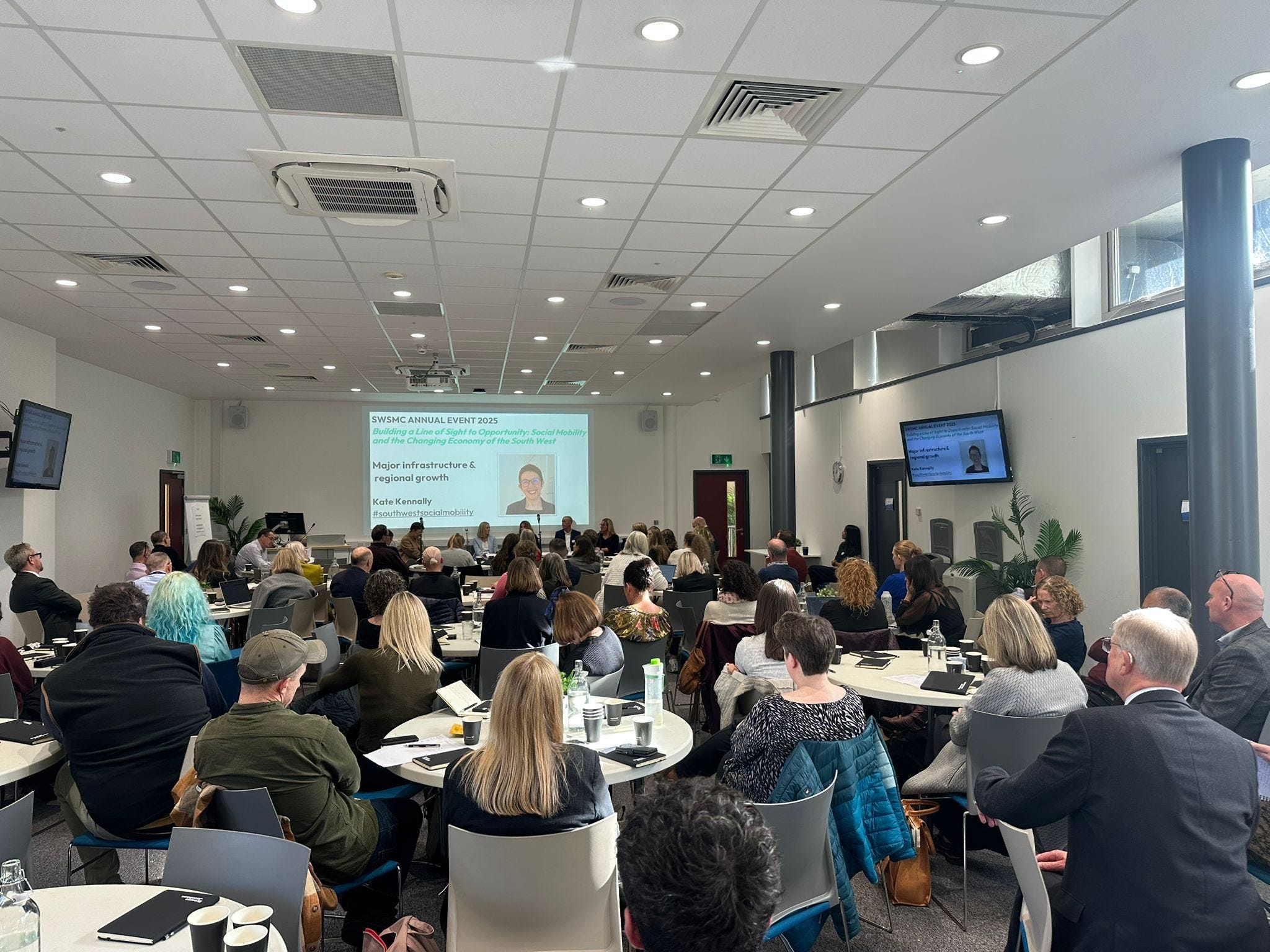
On 22nd October 2025, educators, employers, young people and community leaders came together under the banner of social mobility to explore one central question: How do we build a clear line of sight to opportunity from young people in South-West?
A changing landscape
The South-West peninsula finds itself in transition. Traditional industries remain important, but emerging sectors including major infrastructure projects, sustainable technologies, creative economies and digital services are gaining ground. This shift brings promise, but also a challenge: opportunity is being re-shaped and our systems of education, training and employment must evolve in tandem.
Framing the conversation
Karl Tucker, SWSMC chair, opened the day, telling delegates that that the problem we have with low social mobility in the region is hidden to too many people and the drivers of the problem are not yet readily understood or being addressed systematically. Karl encouraged delegates to engage fully and join the
South-West Social Mobility Commission (SWSMC) on our crusade to make the future brighter for every young person born and growing up in the South West.
Highlights from the day
The agenda opened with a stark reminder: for many young people and adult learners, the pathways into prosperity are still opaque. Even when jobs exist, the line of sight to those roles -knowing they exist, being prepared and being connected- can be weak or missing altogether.
Young People
Five young people, studying various courses, from Taunton college told the audience about the challenges of living, studying and working in the South West. They were studying: BSc (Hons) Adult Nursing, L3 Diploma in Art & Design and L3 T Level Health.
Challenges included: a lack of careers role models- with the young people suggesting that former students coming to speak to school students would have been a powerful tool; transport cost, with one student paying £6 per day to be able to attend college, initially being told that her low attendance rate meant that she was not eligible for a travel bursary; transport including infrequency of services, especially in rural areas and the students’ perceptions that too much emphasis was being placed on GCSE maths and English at the expense of other subjects and opportunities to develop the relevant skills to help them prepare for the world of work.
The young people were clear that careers guidance should start in Year 9, if not earlier, for them to have the information and support they need to live and work in the South West in the future.
Learning from major infrastructure and regional growth
The Major Infrastructure session, chaired by Kate Kennally, showcased how large-scale projects and education-industry partnerships are reshaping opportunity in the South West. Speakers highlighted initiatives like Babcock’s Festival of Engineering, which saw a 60% increase in students aspiring to engineering roles after attending, and EDF’s supported traineeships for students with SEN as well as their partnerships with City College Plymouth and UCS group.
Key messages included:
Relationships and collaboration matter: Education providers must actively engage with employers, from major firms to SMEs, to understand emerging skills needs and co-create opportunities. Initiatives such as Princess Yachts Academy with City College Plymouth and UCS College’s partnerships with EDF demonstrate the value of structured, long-term engagement.
Agility in education: Providers need to respond quickly to market needs, offering learning opportunities year-round and practical on-site programmes, including Level 2 courses.
Bringing learning to life: Real-world experience-showing young people the relevance of maths, English and transferable skills builds confidence and helps students see the pathway from classroom to career. Icebreaker activities and team-building exercises, though sometimes met with initial resistance, proved essential for developing soft skills.
The session underscored a critical point: solutions already exist within the room. Delegates were encouraged to ask themselves not just why they were there, but how they could actively work with others to advance social mobility across the region.
Insights from regional businesses
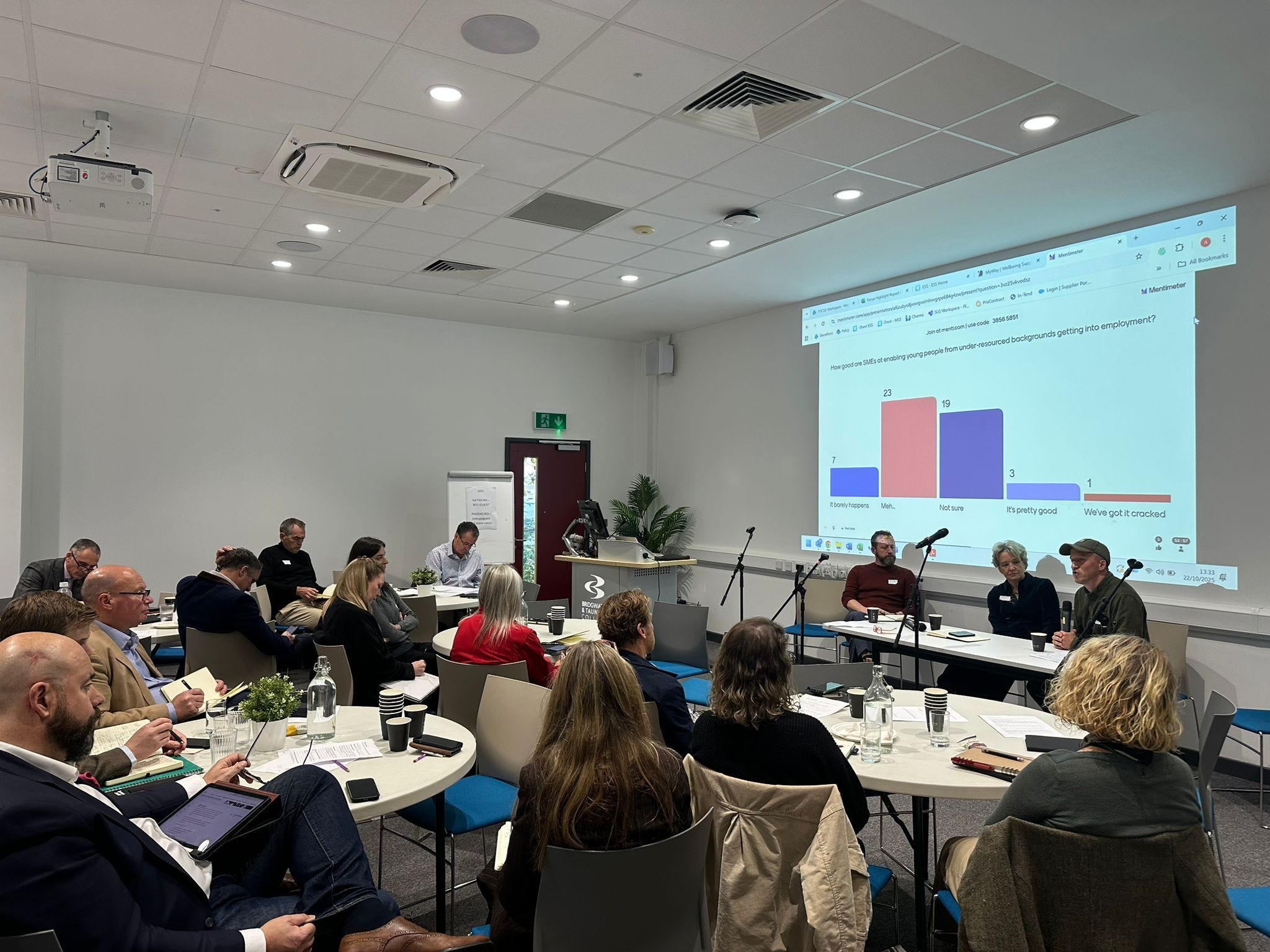
Regional employers reinforced that no business operates in isolation, and no opportunity exists without collaboration. Browne Jacobson and Bray Leino highlighted practical steps which they had taken for expanding access:
Partnerships with local education providers: Tailoring experiences to students’ interests and needs and using supply chains to expose young people to a range of roles.
Practical skill-building: Introducing students to the breadth of careers within a sector, fostering curiosity and leveraging ‘near-peer’ storytelling to make pathways tangible.
Data as a lever: While often overlooked, sharing local labour market information can spark conversations and guide SMEs to engage meaningfully with learning providers.
Industry bodies: Using industry bodies to support this work at a systems level was identified as a key part of this work.
SMEs also stressed the importance of civic responsibility, considering intergenerational challenges, and inspiring young people to see themselves in local industries. With the right guidance and support, SMEs can offer transformative experiences that make opportunity visible and accessible.
Bringing it together
Across all sessions, three themes emerged consistently:
Access: Opportunities must be visible, relevant and reachable.
Alignment: Education and training must reflect the realities of emerging sectors.
Agency: Young people need to feel empowered to pursue, shape and succeed in their chosen pathways.
The event made one thing clear: building a line of sight to opportunity requires more than information. It requires relationships, inspiration and collective effort across sectors. When educators, employers, policymakers and young people work together, the promise of the South West’s evolving economy can become a lived reality for all.
Next steps for delegates and organisations
Continue to strengthen partnerships between education providers and businesses, using alumni where possible to spread the word and provide a line of sight to opportunity.
Invest in programmes that broaden awareness of emerging sectors and provide practical experience.
Use data strategically to identify gaps, opportunities and measurable impact.
Focus on inspiring young people through role models, mentors, and near-peer engagement.
Final word
The message resonated throughout the day: the South West is on the move and opportunity in the region is evolving. To turn aspiration into tangible progress, we must ensure young people not only see what’s possible but know how to get there. By working together across sectors and tailoring pathways to local needs, we can make social mobility in the South West more than a goal: it can become a reality.
Thanks for writing this, it realy clarifies a lot. We need faster digital pathways, you know?